


Received: 16-Sep-2026, Manuscript No. GJBM-26-194576; Editor assigned: 18-Sep-2026, Pre QC No. GJBM-26-194576 (PQ); Reviewed: 02-Oct-2026, QC No. GJBM-26-194576; Revised: 12-Oct-2026, Manuscript No. GJBM-26-194576 (R); Published: 19-Oct-2026, DOI: 10.15651/GJBM.26.20.001
The increasing use of strategic agility has raised expectations for better organizational competitiveness and performance among companies listed on the Nairobi Securities Exchange (NSE). However, many companies listed on the exchange continue to face issues such as falling profitability, low returns on assets and equity, inefficient operations, and limited growth. These problems were linked to increasing operating costs, fluctuating exchange rates, high interest rates, and stronger competition. In response, many firms invested substantially in digital transformation initiatives to enhance competitiveness. Nevertheless, the varying performance outcomes among firms undertaking similar digital transformation initiatives still remains a major concern for the firms. This study sought to investigate the effect of strategic agility on firm the performance of firms listed in the NSE. The study was anchored on Dynamic Capabilities Theory and used a positivist research approach with a correlational design. The focus was on NSE-listed firms, with top management executives serving as key sources of information. Data was gathered using structured electronic questionnaires sent to a systematically selected sample of executives from listed firms. The results showed that strategic agility had a positive and statistically significant effect on firm performance (β=0.567, p<0.001), explaining 32.2% of the variation in firm performance at NSE (R2=0.322). The study recommends that firms should institutionalize strategic agility by strengthening environmental scanning system, enhance strategic planning flexibility, promoting decentralized decision-making and develop organizational structures capable of responding rapidly to environmental challenges
Strategic agility, Performance of firms listed at NSE, Dynamic capabilities theory, Supply chain, CMA
Landscape shaped by rapid technological change, geopolitical tensions, tightening environmental expectations, persistent economic uncertainties and rapid technological disruption, all of which exert measurable pressure on profitability and market valuations (Sutton, 2025). Empirical studies of firms listed on European and Asian stock exchanges indicate that inflationary pressures, supply-chain disruptions, and heightened capital-market uncertainty have significantly increased earnings volatility and exposure to downside risk (Adegbile et al., 2022). These external shocks have weakened cash flows and destabilized market valuations, forcing listed firms to reassess their operating and riskmanagement approaches.
Despite its significance, the NSE has encountered major challenges over the last five years that have limited its capacity to fulfill its developmental role (Adelekan et al., 2023). Market performance metrics indicate extended periods of low trading activity, declining market capitalization, and weak investor sentiment. For example, the total market value fell from approximately KES 2.9 trillion to KES 2.2 trillion between 2019 and 2022, showing falling share prices and loss of capital across many listed companies. These issues are linked to a mix of domestic and international factors, such as global conflicts, rising interest rates, exchange rate fluctuations, inflationary pressures, and geopolitical uncertainty, which have disrupted supply chains and reduced economic activity. As a result, the NSE experienced lower trading volumes, continuous foreign investor withdrawals, and increased market volatility, all of which reduced investor confidence.
Despite its importance, the NSE has faced significant challenges over the past five years that have constrained its ability to fully perform this developmental role. Market performance indicators reveal prolonged periods of subdued trading activity, declining market capitalization, and weak investor sentiment. For example, total market value dropped from about KES 2.9 trillion to KES 2.2 trillion in the period 2019-2022, reflecting falling share prices and capital erosion across several listed firms. These challenges have been attributed to a combination of domestic and global shocks, including the global conflicts, rising interest rates, exchange rate volatility, inflationary pressures, and geopolitical uncertainties that disrupted supply chains and dampened economic activity. Consequently, the NSE experienced reduced turnover, persistent foreign investor outflows, and increased volatility, all of which undermined market confidence.
In addressing these challenges, regulators, policymakers, and the exchange itself have taken several mitigation efforts to stabilize and revitalize the market. The Capital Markets Authority (CMA) has implemented regulatory reforms aimed at strengthening market integrity, enhancing disclosure requirements, and improving corporate governance among listed firms. At the same time, the NSE has invested in market infrastructure modernization, including the adoption of digital trading platforms, automation of clearing and settlement processes, and introduction of new products including Exchange-Traded Funds (ETFs), derivatives, and Real Estate Investment Trusts (REITs) to broaden investment options. These initiatives have been complemented by efforts to promote financial literacy and attract small and medium-sized enterprises through alternative market segments, with the goal of deepening the market and improving resilience (Adelekan et al., 2023).
Strategic agility theory also provides an explanatory lens for understanding why digital transformation has not result in better performance among firms listed on the NSE. The theoretical framework maintains that in turbulent settings, firm performance relies on sensing environmental changes rapidly, making timely as well as innovative strategic decisions, and reconfigure resources consistent with emerging opportunities and threats. Strategic agility emphasizes flexibility, speed, and adaptability in strategic processes, which are essential for leveraging digital technologies in dynamic markets. Tallon et al., (2022) asserts that without strategic agility, firms cannot align well with digital initiatives with evolving market demands, occasioning fragmented systems, underutilized technologies, and limited performance impact. This perspective aligns with empirical evidence showing that firms that combine digital transformation with agile strategic decision-making achieve superior performance outcomes compared to those that adopt digital technologies within rigid organizational structures. Similarly, according to Andrade et al., (2022) digital transformation gives data capabilities and technological infrastructure necessary for competitiveness, but strategic agility determines how quickly and effectively these capabilities are deployed to create value. Duyen (2025) also affirm that firms that are strategically agile can rapidly adjust business models, reallocate resources, and innovate in response to market shifts, thereby amplifying digital transformation impact. Conversely, firms lacking agility may experience delayed responses to environmental changes, diminishing returns on digital investments, and continued performance underachievement (Aguirre-Urreta and Hu, 2019).
A growing body of empirical literature demonstrates that although digital investments enhance information processing capacity, operational efficiency, and market responsiveness, many firms struggle to translate these technological gains into sustained financial and market performance when organizational responses remain rigid. Calli and CallI (2021) show that digital maturity improves firm performance only when supported by sufficient organizational flexibility that allows firms to reconfigure processes and redeploy resources in response to environmental constant changes. In a similar vein, Khraim (2022) finds that technologically innovative capabilities significantly influence firm performance, but this relationship is dependent upon strategic agility, which enables firms to see opportunities, leverage them promptly, and realign internal structures to support strategic renewal. Complementary evidence is provided by Mahmoud et al., (2025) whose study reveals that firm agility significantly moderates the link between digital HRM systems and HR performance, highlighting the importance of agile organizational responses in optimizing the performance of digital systems. Therefore, these studies converge on the argument that digital transformation alone is insufficient to deliver superior outcomes unless firms possess the agility required to dynamically adjust strategies and structures.
Additional empirical evidence supports strategic agility’s the moderating role across various organizational and sectoral contexts, while also highlighting important gaps relevant to firms listed on the NSE. Uru et al., (2024) show that although digital transformation partly controls the linkage between company’s ambidextrous capabilities and competitive advantage in SMEs, strategic agility strengthens this relationship by enhancing firms’ capacity to simultaneously explore and exploit opportunities. In a similar vein, Khan and Siddiqui (2025) in their study of firms in Pakistan, found strategic agility to be favourably controling the link between digital transformation and performance by improving proactive resilience and ambidextrous capabilities.
Despite these findings, the majority of the current investigation directs attention to non-listed firms, SMEs, or organizations operating within Asian and Middle Eastern contexts. Consequently, empirical evidence show how strategic agility moderates the linkages between digital transformation and productivity among firms trading in African securities exchanges, particularly the NSE – listed firms is still lacking. Additionally, prior research often treats digital transformation as a singledimensional concept, overlooking key components such as adoption of modern technology, integration of digital process as well as digital culture, which are incorporated in this study. Accordingly, the present research bridged these gaps by examining empirically how strategic agility moderates the connection between enterprise modernization and productivity within NSE-listed firms.
General Objective of the Study
To determine the effect of strategic agility on performance of firms listed in Nairobi Securities Exchange, Kenya.
Conceptual Framework
The conceptualization above depicts how digital transformation relates with NSE listed firm’s performance, with digital transformation operationalized through three core dimensions: Adoption of digital technology, digital process integration, as well as digital culture. This conceptual framework was adapted and extended from prior scholarly works relating to digital transformation, strategic agility and dynamic capabilities. Digital transformation multidimensionality drawn from Vial (2019) and Warner and Wager (2019), who emphasize that it involves coordinated shifts in technology, organizational culture and processes rather than isolated IT investments. The inclusion of digital technology adoption and digital process integration reflects insights from (Aguirre-Urreta et al., 2013) who link digital technologies and process integration to improved operational and strategic outcomes. The digital culture dimension was informed by studies highlighting datadriven decision-making role, experimentation, and digital leadership in sustaining transformation outcomes.
Strategic agility was integrated as a moderating construct based on strategic agility theory and dynamic capabilities perspectives advanced by Doz and Kosonen (2010), Sambamurthy et al., (2003), and Tallon et al., (2022) which argue that agility determines how effectively firms convert digital capabilities into performance gains. The present framework modifies these prior models by explicitly positioning strategic agility as a moderator rather than a direct antecedent of performance and by contextualizing the relationships within NSE listed firms. This adaptation responds to calls in the literature for context-specific models and for disaggregated analysis of digital transformation dimensions in emerging market capital markets.
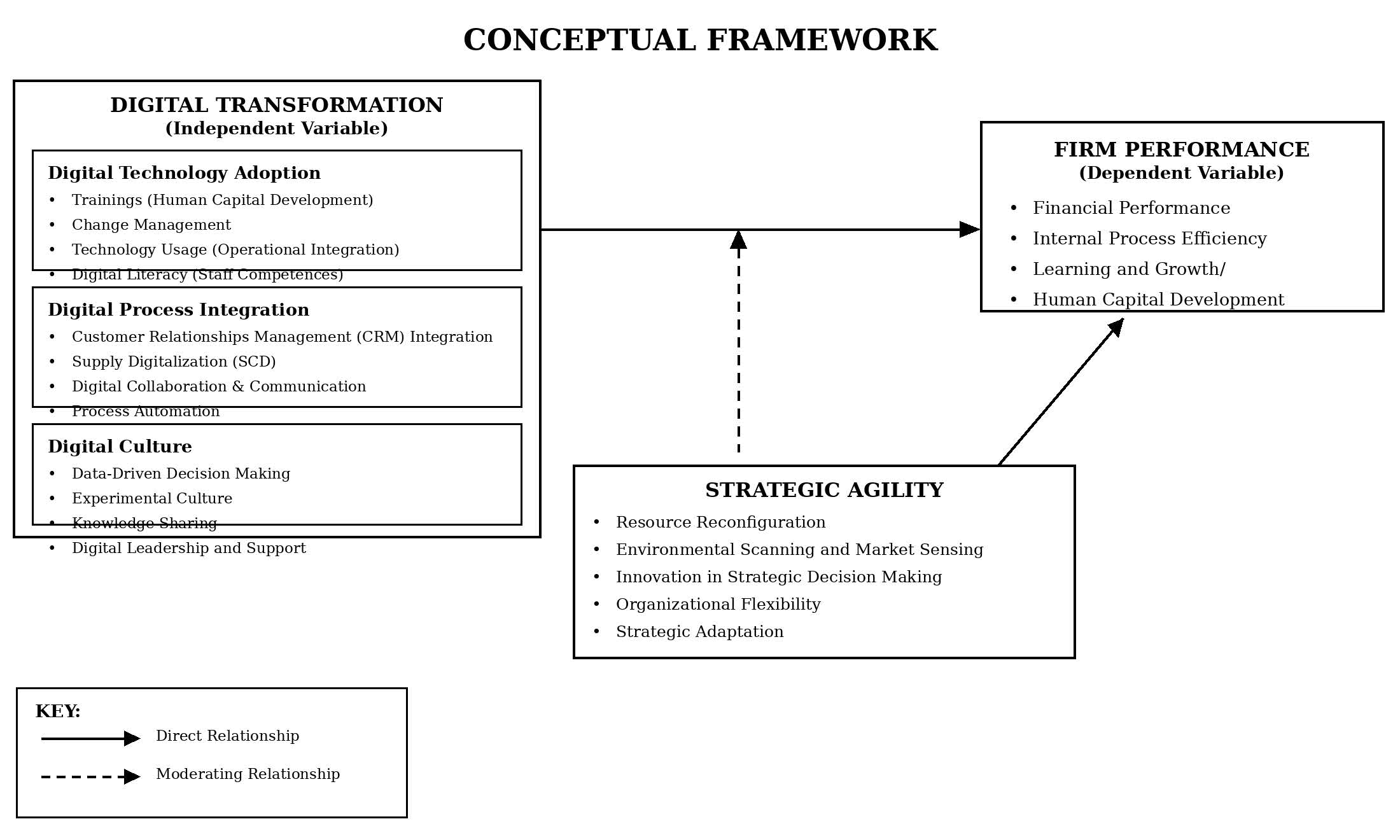
Figure 1: Digital transformation, strategic agility and firm performance relationship.
Strategic Agility Theory
Strategic Agility Theory offered an important groundwork providing information on how companies can rapidly adjust their strategic direction in response to turbulent and unpredictable environments (Aiken et al., 2019). The theory emphasizes an enterprise’s capacity to rapidly predict alterations in the outside environment, make timely strategic decisions, and reassemble resources and structures in a way to respond to uncertainty and disruption (Teece et al., 2016). In digital transformation, this theory explains why the performance outcomes of digital initiatives differ across firms. While digital transformation enhances technological capabilities, its contribution to firm performance depends on how quickly and effectively firms adjust strategies, processes, and resource allocations to exploit digital opportunities (Akone and Kinyua, 2025). Strategic agility therefore acts as a catalyst that strengthens or weakens the influence of technology-driven transformation on productivity, internal process efficiency, and learning and growth outcomes (Al Halalmeh, 2021).
Strategic agility explains how firms convert digital transformation inputs into performance outputs (Al Jabri et al., 2024). Resource reconfiguration enables firms to redeploy digital assets, human capital, and operational capabilities toward emerging opportunities created by digital technologies, thereby amplifying the performance benefits of digital process integration and automation (Aldoseri et al., 2023). Environmental scanning and market sensing allow firms to continuously interpret customer data, supply chain signals, and competitive movements generated through digital systems, ensuring that digital investments remain aligned with market needs (Alhumud and Alsulami, 2025). Innovation in strategic decision making further ensures that insights derived from digital technologies are translated into timely and adaptive strategic actions, rather than remaining underutilized (Utomo et al., 2025). Organizational flexibility supports rapid structural and process adjustments, allowing firms to scale, redesign, or abandon digital initiatives in response to changing conditions, which strengthens the digital transformation– performance relationship (Ali, 2024).
Strategic Agility Theory also explains how strategic adaptation reinforces the ever-changing aspect of digital evolution (Alkandi and Helmi, 2024). Technology-driven transformation is not an instant technological upgrade, rather, it is a continuous procedure requiring continual adjustment of strategies and business models (Al-Matari et al., 2014). Companies exhibiting heightened adaptive strategy are more capable of recalibrating digital initiatives, integrate new technologies, and realign operational processes as environmental conditions evolve. According to Satar et al., (2025) strategic agility positively moderates the relatedness of digital transformation to profitability by enabling businesses to have a quick and effective response to volatility, uncertainty, and competitive pressure. In contrast, firms with low strategic agility often experience weaker or delayed performance gains because rigid strategies and slow decision-making limit their ability to exploit on their efforts to embrace enterprise modernization (Alnachef and Alhajjar, 2017).
Strategic Agility Theory underpins this study by offering a clear rationale for the moderating influence of strategic agility on the connection between digital transformation and profitability. It explains that digital technologies and integrated digital processes lead to enhanced performance only when organizations have the agility to detect environmental shifts, reconfigure resources, and swiftly adjust their strategies. By treating strategic agility as a moderator, the study recognizes that the technology-driven transformation can only birth success if the company is able to respond in a strategic way and make proper adjustments to changes as they occur.
Empirical Literature Review
Strategic agility denotes the capacity of the company to predict change in its environment, promptly effecting proper strategic moves, and rapidly adjust its resources, structures, and processes to react to the identified opportunities or threats (Alrawashed and Shubita, 2024). It emphasizes speed, flexibility, and responsiveness in strategy formulation and execution, especially in dynamic and uncertain environments (Alyoubi et al., 2021). Girod and Whittington, (2017) views the responsiveness a critical organizational capacity allowing companies to remain competitive by continuously aligning their strategies with market conditions, technological changes, and customer needs. They assert that firms that demonstrate better strategic agility have improved performance because they can quickly exploit emerging opportunities and mitigate threats.
Resource reconfiguration as a component of strategic agility explaining the capacity of firms to redeploy, restructure, and recombine their resources to support new strategic directions (Alyoubi et al., 2021). This includes reallocating financial, human, and technological resources to areas with higher strategic value. According to Clauss et al., (2019) firms that can rapidly reconfigure their resources are more effective in responding to environmental changes, which leads to improved operational efficiency and financial performance. Akone and Kinyua, (2025) also add that resource reconfiguration allows organizations to avoid rigidity and ensures that existing capabilities continue to support competitive advantage in changing markets. Environmental scanning and market sensing represent involve systematically monitoring external trends, competitors, customers, and technological developments. Through continuous scanning and sensing, firms identify early signals of change and emerging opportunities or threats (Aminullah et al., 2025). Studies indicate that strong environmental scanning enhances firm performance by reducing uncertainty and enabling proactive strategic responses rather than reactive actions (Anton et al., 2023). Similarly, the works of (Venanzi, 2011) confirm that firms that effectively sense market shifts are better prepared to adjust strategies and align their offerings with customer and market expectations.
Innovation in strategic decision making explains the capacity of an enterprise to adopt creative, flexible, and forward-looking approaches when making strategic choices (Taouab and Issor, 2019). Strategic agility encourages managers to challenge existing assumptions, explore alternative strategies, and use realtime information when making decisions. Empirical evidence suggests that innovative strategic decision making improves firm performance by supporting timely responses to environmental changes and enabling firms to capitalize on new technologies and business models (Velyako and Musa, 2024). This approach helps firms avoid rigid planning processes that may limit adaptability in dynamic environments.
Organizational flexibility is closely linked to strategic agility and describes the degree to which organizational structures, processes, and routines can be adjusted quickly without excessive resistance (Szukits and Moricz, 2024). Flexible organizations can modify roles, workflows, and coordination mechanisms to support new strategic priorities (Vial, 2021). Research shows that organizational flexibility enhances firm performance by enabling faster implementation of strategic decisions and reducing delays associated with structural rigidity (Arifuddin et al., 2022). The same works also assert that flexibility also supports employee responsiveness and collaboration, which are essential for executing agile strategies effectively.
Strategic adaptation refers to the continuous adjustment of firm strategic action as a way to respond in response to changes from inside and outside the company. It reflects the long-term aspect of strategic agility, where firms learn from past actions and refine their strategies over time (Teguh et al., 2022). Studies indicate that firms that consistently adapt their strategies achieve superior performance because they remain aligned with evolving market conditions and technological developments. Strategic adaptation ensures that responsiveness is not a single action, rather an ongoing capability that supports sustained firm performance in turbulent environments (Vaske et al., 2017).
METHODOLOGY
Research Design
Babbie (2020) explains that a research design serves as the fundamental structure for an inquiry, explaining the general plan and the particular tools for obtaining data and analysis. He highlights that a well-constructed research design offers a clear and systematic approach, which supports thorough data gathering, analysis, and interpretation. Similarly, Creswell and Creswell (2018) define research design as a comprehensive plan that guides the research process by incorporating philosophical beliefs, research strategies, and methodological steps. The study used a correlational research design to investigate and predict relationships between variables. According to Seeram (2019) correlational research involves measuring two or more variables to determine the direction and strength of their connections. By examining these links without altering the variables, this design offers a reliable and suitable framework for initial investigation.
Target Population
Population is the complete group of individuals or entities from which a study gathers data and to which the results are meant to be applied (Appio et al., 2021). In this research, the population includes all companies traded in the NSE, which currently has 64 listed firms. These companies are spread across various important economic areas, including manufacturing, banking, insurance, agriculture, telecommunications, and energy, all of which significantly drive Kenya's economic growth and development.
The study population included operational managers, information technology managers, and procurement officers drawn from the listed firms. These categories of respondents are directly engage in the planning, execution, and supervision of technology-driven transformation initiatives within their organizations. As such, they are well positioned to provide informed and reliable information on issues related to digital technology adoption, digital process integration and digital culture.
Data Collection Method
The study used a quantitative data collection approach using electronically administered questionnaires aimed at obtaining reliable and objective data from top management of enterprises listed on the NSE. The chosen data collection methods are guided by the nature of the study variables, the need for generalizability of findings, and the requirement to test moderation effects.
Data Analysis and Presentation
The data analysis for the inquiry was done using quantitative methods that are consistent with the inquiry’s objectives and theoretical foundation. The analysis proceeded in sequential stages, beginning with data preparation and descriptive analysis, followed by inferential statistical analysis using multiple regression models. Prior to regression analysis, the data was screened for completeness. Diagnostic tests were conducted to assess the assumptions of regression analysis, including normality, linearity, homoscedasticity, and multicollinearity. Once these assumptions are satisfied, hypothesis testing was undertaken using regression analysis at a 95 percent confidence level. Firm performance was treated as the outcome variable, while the dimensions of digital transformation and strategic agility serve as independent variables and moderator, respectively. Composite indices are created for multidimensional constructs using mean scores, consistent with best practices in management research (Appio et al., 2021).
Response Rate
The study focused on 246 top management respondents from various sectors and a response rate of 240 translating to 97.56% was achieved as shown in the Table 1.
| Sector | Frequency | Percent |
| Agriculture | 17 | 7.1 |
| Automobile and accessories | 4 | 1.7 |
| Banking | 49 | 20.4 |
| Commercial and services | 41 | 17.1 |
| Construction and allied | 16 | 6.7 |
| Energy and petroleum | 20 | 8.3 |
| Exchange trade funds | 7 | 2.9 |
| Insurance | 28 | 11.7 |
| Investment | 13 | 5.4 |
| Investment services | 4 | 1.7 |
| Manufacturing and allied | 32 | 13.3 |
| Real estate and Reits | 4 | 1.7 |
| Telecommunications | 5 | 2.1 |
| Total | 240 | 100 |
Table 1: Response rate.
Effect of strategic agility on firm performance of firms listed in the NSE: Objective two was to determine the effect of strategic agility on performance of firms listed in the Nairobi Securities Exchange. A multiple linear regression was conducted to establish this relationship and the results are as show in the Table 2.
| Coefficientsa | ||||||||
| Model | Unstandardized coefficients | Standardized coefficients | Collinearity statistics | |||||
| B | Std. error | Beta | t | Sig. | Tolerance | VIF | ||
| 1 | (Constant) | 4.038 | 0.03 | 136.01 | 0 | |||
| SA | 0.537 | 0.051 | 0.567 | 10.626 | 0 | 1 | 1 | |
| Note: aDependent variable: FP | ||||||||
| Model summaryb | ||||||||
| Model | R | R Square | Adjusted R Square | Std. error of the estimate | Durbin-Watson | |||
| 1 | .567a | 0.322 | 0.319 | 0.45988 | 1.617 | |||
| Note: aPredictors: (Constant), SA bDependent variable: FP |
||||||||
| ANOVAa | ||||||||
| Model | Sum of squares | df | Mean square | F | Sig. | |||
| 1 | Regression | 23.882 | 1 | 23.882 | 112.92 | .000b | ||
| Residual | 50.336 | 238 | 0.211 | |||||
| Total | 74.218 | 239 | ||||||
| Note: aDependent Variable: FP bPredictors: (Constant), SA |
||||||||
Table 2: Effect of strategic agility on firm performance.
The simple linear regression analysis above was conducted to examine the effect of Strategic Agility (SA) on the performance of firms listed on the Nairobi Securities Exchange (NSE). The results indicate that the regression model is statistically significant, demonstrating that strategic agility is a significant predictor of firm performance. The ANOVA results show that the model produced an F-statistic of 112.920 with a significance level of p<.001 (F(1,238)=112.920, p=.000). This indicates that the regression model provides a significantly better prediction of firm performance. Therefore, strategic agility has a statistically significant effect on the performance of firms listed on the Nairobi Securities Exchange.
The model summary shows a correlation coefficient (R) of .567, indicating a moderate positive relationship between strategic agility and firm performance. The coefficient of determination (R2=.322) reveals that strategic agility explains approximately 32.2% of the variation in the performance of firms listed on the Nairobi Securities Exchange, while the remaining 67.8% of the variation is attributable to other factors not included in the model. The Adjusted R2 of .319 indicates that after adjusting for the sample size and the number of predictors, the explanatory power of the model remains virtually unchanged, confirming that the regression model is stable and reliable. The standard error of the estimate (0.45988) suggests that the model predicts firm performance with a relatively small average prediction error. In addition, the Durbin-Watson statistic of 1.617 falls within the acceptable range of approximately 1.5 to 2.5, indicating that there is no serious autocorrelation among the residuals and that the assumption of independent errors has been satisfied.
The regression coefficients further indicate that strategic agility has a positive and statistically significant effect on firm performance. The estimated regression equation is expressed as:
FP = 4.038 + 0.537(SA)
The constant (B=4.038, p<.001) represents the expected level of firm performance when strategic agility is absent or equal to zero. More importantly, the regression coefficient for strategic agility (B=.537, β=.567, t=10.626, p<.001) indicates that a one-unit increase in strategic agility leads to an estimated 0.537-unit increase in firm performance. The standardized beta coefficient (β=.567) demonstrates a strong positive effect, implying that firms with higher levels of strategic agility are likely to achieve better performance than firms with lower levels of agility. This finding suggests that organizations that are capable of rapidly sensing environmental changes, responding to market dynamics, reallocating resources, and adapting their strategies are more likely to improve their financial, operational, and competitive performance. Because this is a simple regression model with only one predictor, the collinearity statistics (Tolerance=1.000; VIF=1.000) confirm that multicollinearity is not a concern.
The finding that strategic agility has a positive and statistically significant effect on the performance of firms listed on the Nairobi Securities Exchange supports the growing body of empirical evidence that organizations capable of rapidly sensing environmental changes, responding to market shifts, and reconfiguring resources achieve superior organizational performance. The results are consistent with Al Jabri et al. (2024) who found that strategic agility enhances organizational performance by enabling firms to anticipate environmental disruptions and respond proactively to changing competitive conditions. Similarly, Feng and Abd Rani (2024) established that strategic agility improves firm performance by strengthening environmental scanning, resource reconfiguration, and strategic flexibility, enabling firms to convert digital investments into competitive advantage. The findings also agree with Dayioglu and Kusku (2024) who reported that firms with higher strategic agility derive greater performance benefits from digital transformation because they continuously align organizational resources with changing market demands.
Likewise, Satar et al. (2025) observed that strategic agility positively influences organizational profitability by enabling firms to respond effectively to market uncertainty and technological disruption. These consistent findings reinforce the argument that strategic agility is an essential organizational capability for sustaining competitiveness in volatile business environments.
The present findings also support studies that emphasize the operational dimensions of strategic agility. Mueller- Saegebrecht and Walter (2025) argued that strategic agility enables firms to transform digital investments into measurable organizational outcomes through rapid resource redeployment and continuous strategic adaptation. Similarly, Yu et al., (2019) demonstrated that environmental scanning and market sensing improve organizational performance by enabling firms to identify emerging customer needs and competitive opportunities before their rivals. Chavarnakul et al. (2025) further found that organizations capable of continuously reconfiguring their human, technological, and operational resources are better positioned to exploit emerging opportunities and improve firm performance. Likewise, Utomo et al., (2025) concluded that strategic decision-making innovation allows organizations to transform insights obtained from digital technologies into timely managerial actions, thereby strengthening performance. These reviewed studies support the current findings by demonstrating that strategic agility improves organizational performance through flexibility, rapid decision-making, and continuous strategic renewal.
Despite this broad agreement, the findings contrast with studies suggesting that the effect of strategic agility on performance is not always direct or uniform across organizational contexts. Klos et al., (2021) argued that strategic adaptation is a gradual process whose performance benefits emerge over time because organizations require continuous learning and capability development before realizing substantial gains. Similarly, Akone and Kinyua (2025) reported that organizations characterized by rigid structures, bureaucratic decisionmaking, and limited organizational flexibility often experience weak or delayed performance improvements despite pursuing strategic agility initiatives. These contrasting findings suggest that strategic agility alone may not automatically guarantee improved organizational performance. Rather, its effectiveness depends on complementary organizational resources such as leadership commitment, organizational culture, employee competencies, and technological readiness. The current study, however, demonstrates that strategic agility independently exerts a strong positive influence on firm performance within the context of firms listed on the Nairobi Securities Exchange, indicating that the sampled firms have developed sufficient organizational capabilities to translate agility into measurable performance outcomes.
An examination of the reviewed literature further reveals that most previous studies have conceptualized strategic agility primarily as a moderating or mediating variable rather than as a direct determinant of organizational performance. For instance, Dayioglu and Kusku (2024) and Satar et al., (2025) primarily examined strategic agility as a mechanism that strengthens the relationship between digital transformation and firm performance. Similarly, Mueller-Saegebrecht and Walter (2025) focused on strategic agility as an enabling capability through which organizations derive value from digital transformation initiatives. While these studies provide valuable insights into the indirect role of strategic agility, they provide limited evidence regarding its independent contribution to firm performance. The present findings address this empirical gap by demonstrating that strategic agility itself significantly explains firm performance, accounting for 32.2% of the observed variation in performance. This suggests that beyond strengthening other organizational capabilities, strategic agility constitutes an independent strategic resource capable of generating competitive advantage and improved organizational outcomes.
The findings extend Dynamic Capabilities Theory by providing empirical support for its central proposition that firms achieve superior performance when they continuously sense opportunities, seize emerging prospects, and reconfigure organizational resources to adapt to environmental change (Teece, 2007). The significant positive influence of strategic agility demonstrates that firms possessing stronger adaptive capabilities are better able to convert organizational resources into sustained performance. While Dynamic Capabilities Theory traditionally emphasizes digital technologies, organizational learning, and resource reconfiguration as the primary drivers of competitive advantage, the present findings extend the theory by demonstrating that strategic agility itself functions as a critical higher-order capability that enables organizations to operationalize these dynamic capabilities more effectively. In particular, the results suggest that sensing environmental changes, making timely strategic decisions, and reallocating resources are not merely supporting activities but constitute direct sources of improved firm performance. This broadens the explanatory scope of Dynamic Capabilities Theory by highlighting strategic agility as an essential mechanism through which dynamic capabilities translate into superior organizational outcomes.
The findings also extend Strategic Agility Theory by providing empirical evidence that strategic agility is not only a contextual capability that enhances the effectiveness of digital transformation but also an independent determinant of firm performance. Strategic Agility Theory proposes that organizations create value by rapidly adapting strategies, reallocating resources, and responding effectively to environmental uncertainty (Arbussa et al., 2017). The current findings empirically validate this proposition within the context of firms listed on the Nairobi Securities Exchange, demonstrating that organizations exhibiting greater strategic agility achieve significantly higher performance levels. Furthermore, the results broaden the theory by suggesting that strategic agility contributes directly to organizational success rather than merely moderating relationships between other organizational capabilities and performance. This theoretical extension strengthens Strategic Agility Theory by confirming that strategic agility represents a strategic organizational capability that independently enhances competitiveness and organizational performance in dynamic and technology-driven business environments. Consequently, the study provides context-specific evidence that enriches both theories by demonstrating that organizational adaptability, resource flexibility, and rapid strategic responsiveness are fundamental drivers of sustained firm performance in emerging economies.
The study concludes that strategic agility is a critical determinant of organizational performance among firms listed on the Nairobi Securities Exchange. Firms capable of rapidly adapting to changing market conditions, sensing emerging opportunities, reallocating resources effectively, and making timely strategic decisions are more likely to achieve superior organizational performance. Strategic agility therefore represents a valuable organizational capability that strengthens competitiveness by enabling firms to remain resilient in dynamic and uncertain business environments. The study further concludes that strategic agility should be developed as a core strategic capability because its contribution to organizational performance extends beyond supporting other organizational resources and directly enhances firm performance.
The study recommends that firms institutionalize strategic agility by strengthening environmental scanning systems, enhancing strategic planning flexibility, promoting decentralized decision-making, and developing organizational structures capable of responding rapidly to environmental changes. Organizations should continuously invest in leadership development programmes that equip managers with adaptive leadership competencies required to manage technological disruption and market uncertainty. Firms should also establish mechanisms that encourage continuous innovation, rapid resource reallocation, and cross-functional collaboration to improve organizational responsiveness. These initiatives will enable firms to sustain competitiveness and maintain superior organizational performance.